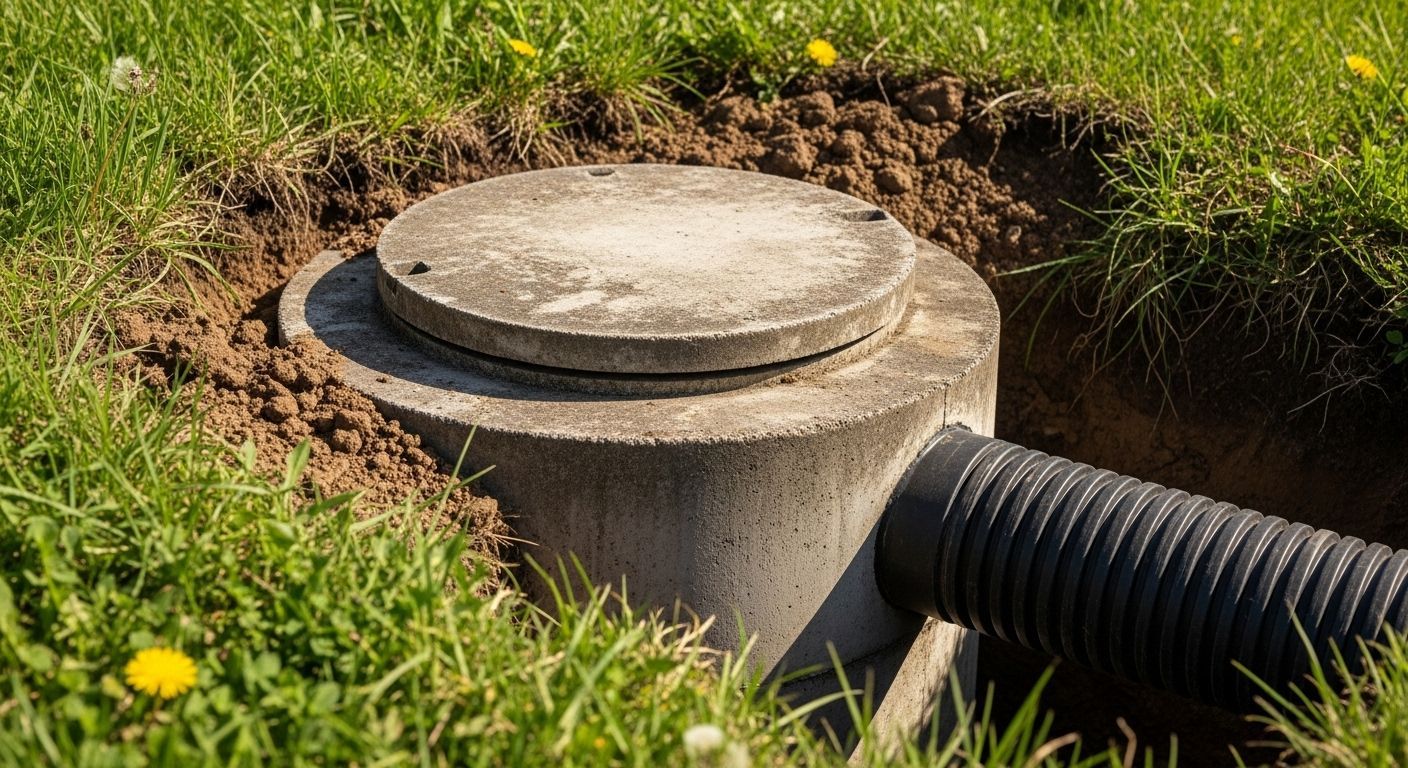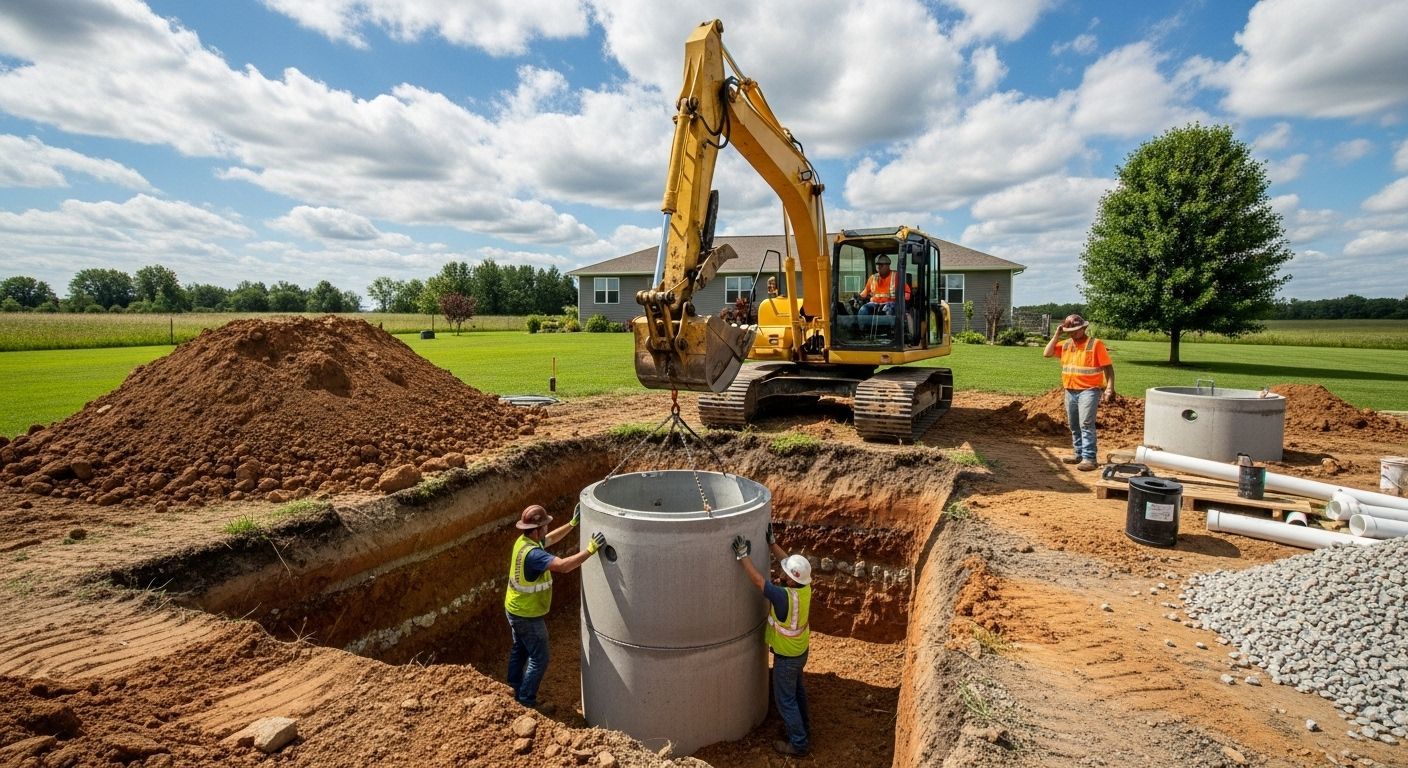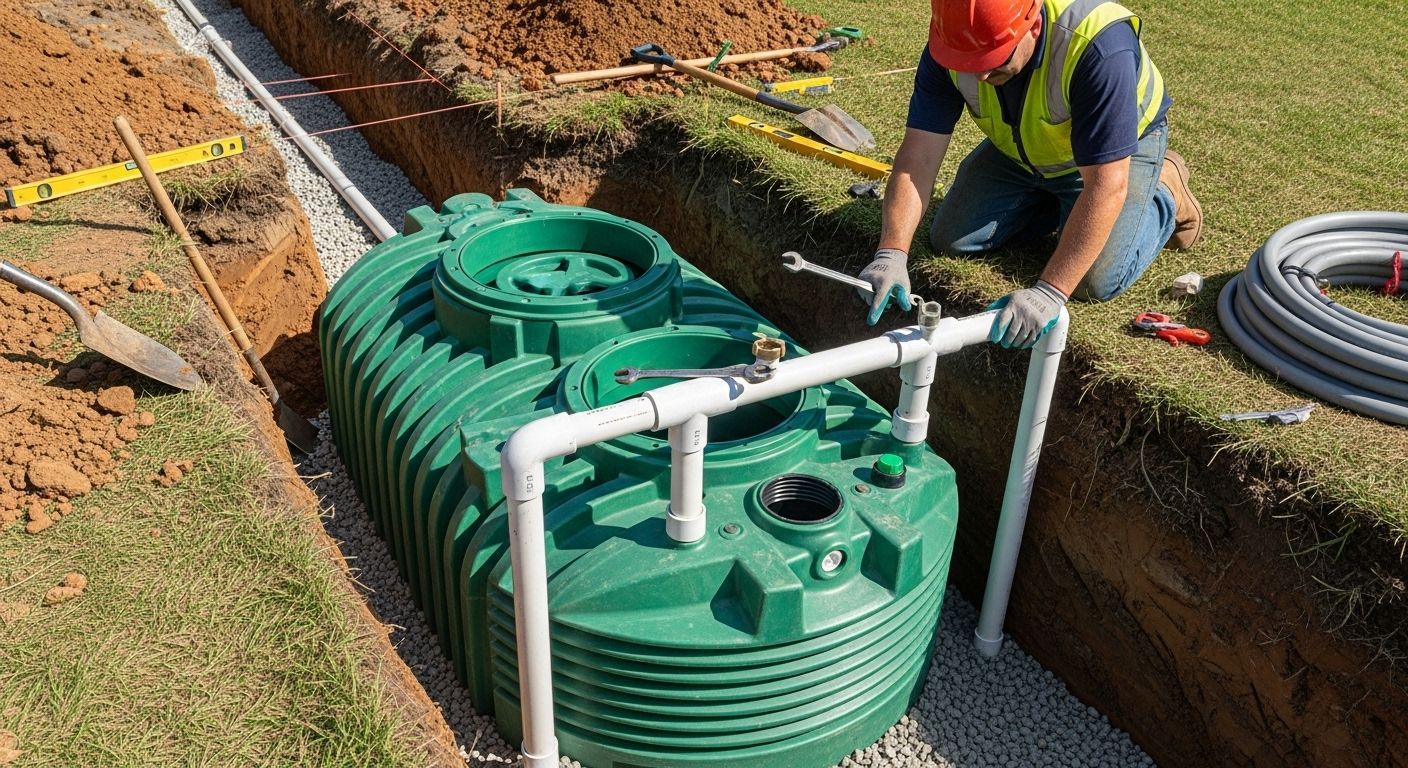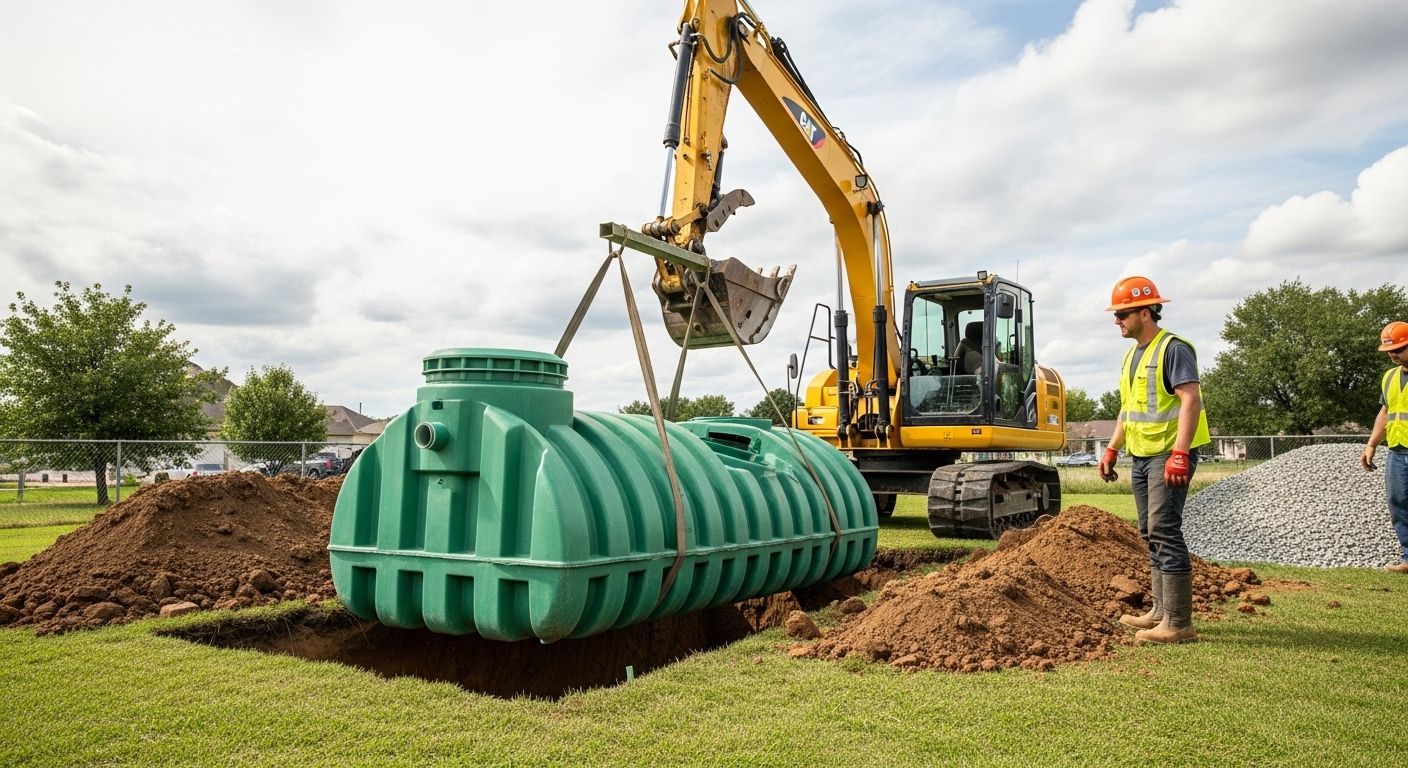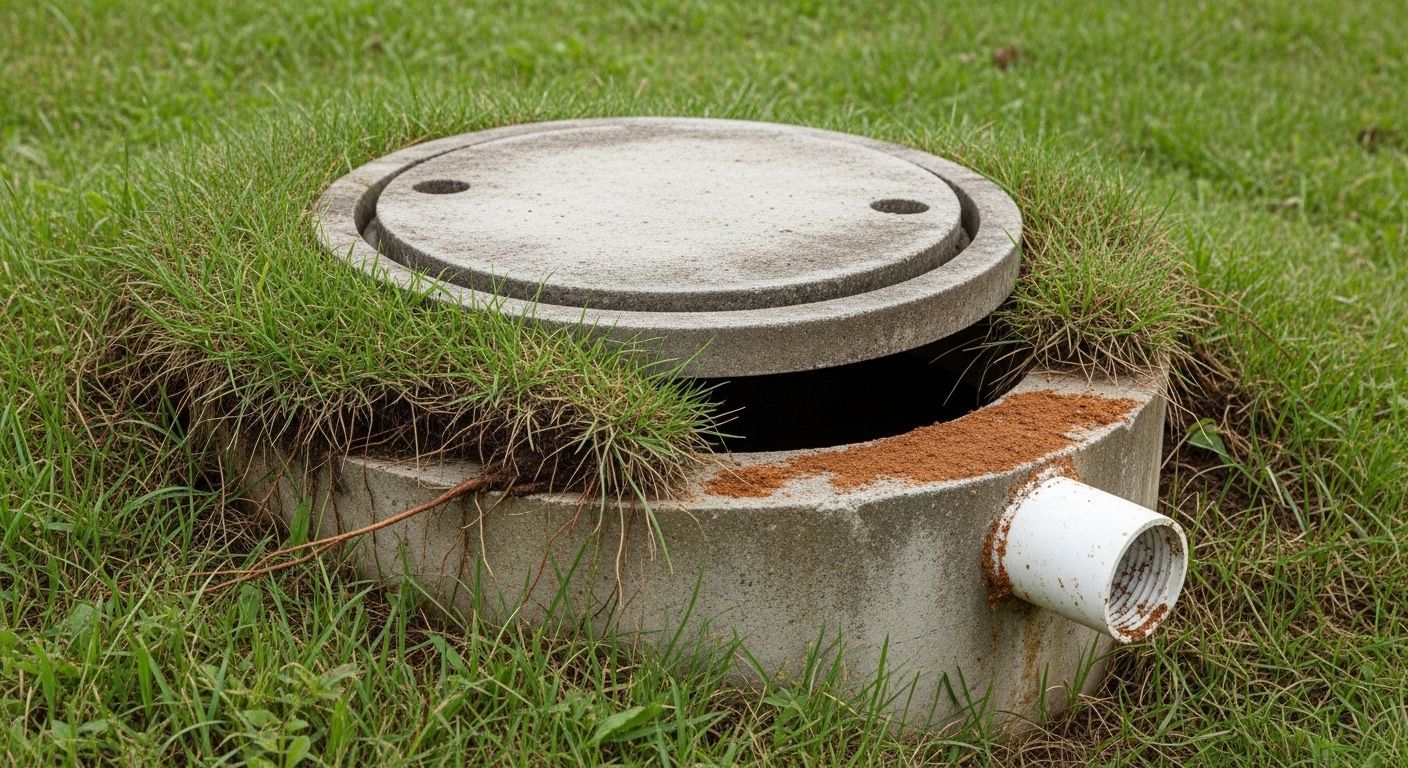
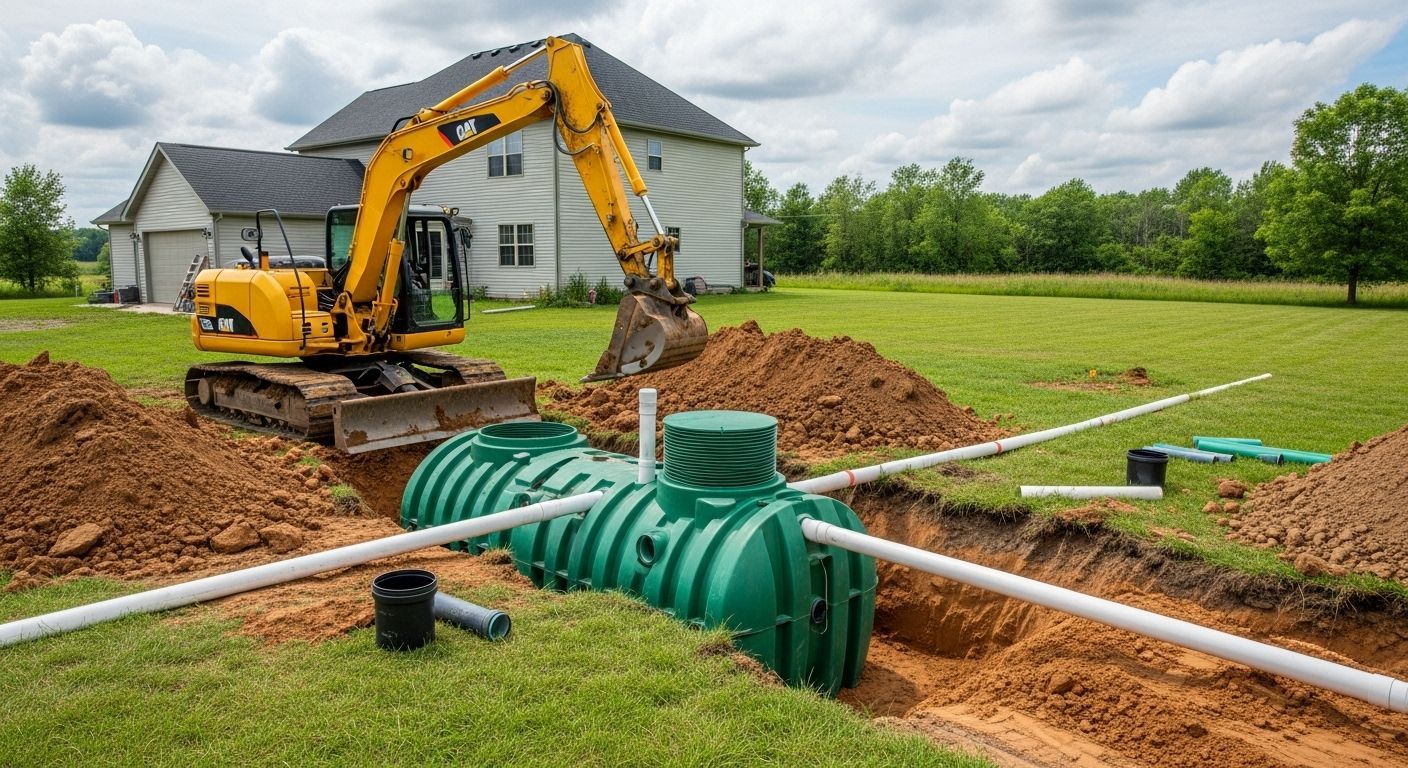
Here's how a healthy septic system works on a normal day. Wastewater leaves your house, enters the tank, separates into solids and liquids, and the liquid effluent flows out into the drain field — a network of perforated pipes buried in gravel that slowly releases treated water into the surrounding soil. The soil does the final filtration work. The whole process depends on the soil being able to absorb that effluent at a reasonable rate.
Now bring in three days of heavy rain. The soil around your drain field becomes waterlogged. The water table rises. The ground is holding all the moisture it can, and suddenly the effluent coming out of your tank has nowhere to go. It can't absorb into saturated soil, so it backs up — into the pipes, into the tank, and eventually toward the lowest point in your plumbing, which is usually a floor drain, a toilet, or a shower on the ground floor of your house.
This is the most common way heavy rain causes septic problems, and it's also the most misunderstood. People assume something is broken or that the tank needs pumping. Often, the system is actually functioning correctly — it's just overwhelmed by conditions it wasn't designed to handle alone.The first step is finding the system, which sounds obvious but isn't always straightforward. Older systems aren't always where you'd expect them, and there may be no visible risers or access lids above ground. Start with your county health department or local permitting office — most jurisdictions have records of septic permits going back several decades, and even a basic permit record will tell you the tank size, the approximate location, and the drain field layout. This is free to request and often available online. If the house was built before modern permitting requirements, records may not exist, but it's always worth checking before you spend money on anything else.